.jpg)
.jpg)
.jpg)
.jpg)
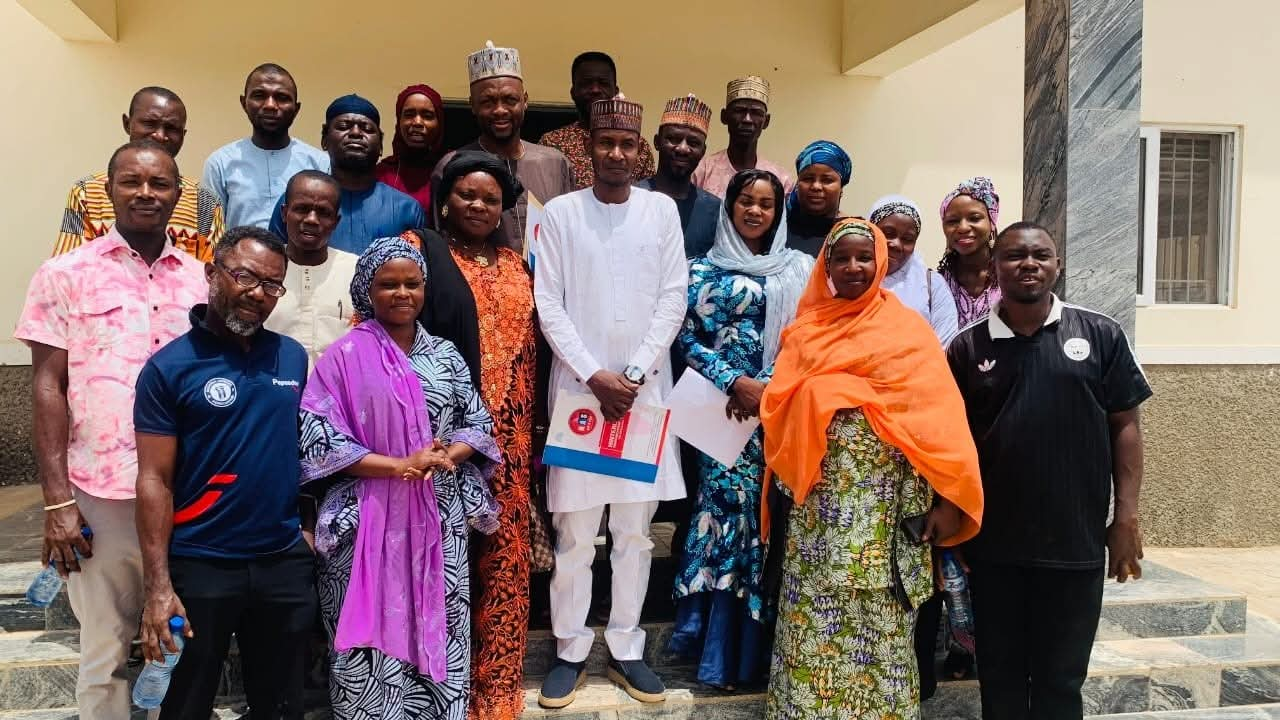
Religious leaders, government officials, education stakeholders, civil society organisations, students, and community representatives have called for stronger accountability in education financing and increased investment in girls' education during a high-level Town Hall Meeting held in Mubi, Adamawa State.
The meeting, organised by the BudgIT Foundation with support from the Malala Fund through the Education Champion Network (ECN), focused on addressing the persistent barriers preventing girls from accessing quality education and ensuring that public funds allocated to education translate into tangible improvements in schools.
Held at the PolyFM Mubi Radio Conference Room, the engagement brought together representatives of government agencies, faith-based organisations, academia, the media, school administrators, community leaders, and student groups to examine the state of girl-child education financing in Adamawa and identify practical solutions.
Speaking during the meeting, Community Champion Augustine Edinyanga urged stakeholders to move beyond budget announcements and ensure that funds allocated to education reach the classrooms where they are most needed.
"The money is there. The policies exist. What is missing is the will—the collective will to ensure that every naira allocated for girls' education reaches the classroom," he said, stressing that many girls continue to drop out of school because of inadequate learning facilities, poor sanitation, and limited support systems.
Participants were informed that while Adamawa State allocated more than ₦83 billion to education in the 2025 budget, historical implementation records reveal that only a fraction of previous allocations had been utilised effectively. Discussions also highlighted concerns that a significant proportion of education spending had been directed toward administrative costs and salaries rather than classroom infrastructure, learning materials, and interventions specifically targeting girls.
Stakeholders also expressed concern over the state's previous inability to access more than ₦1.3 billion in Universal Basic Education Commission (UBEC) matching grants, funds intended to improve basic education infrastructure. Participants noted that such resources could have been used to construct classrooms, provide safe water and sanitation facilities, and improve learning conditions for pupils, particularly girls.
However, the meeting acknowledged recent progress following Adamawa State's successful defence of its 2022, 2023, and 2024 UBEC Matching Grant Action Plans, which secured a ₦12 billion intervention fund for education development. Participants described the development as evidence that stronger commitment and timely action could significantly improve education financing in the state.
Throughout the interactive sessions, participants identified several challenges affecting girls' education, including poverty, child hawking, early marriage, teenage pregnancy, harmful cultural practices, adult illiteracy, inadequate school infrastructure, poor menstrual hygiene facilities, shortage of qualified teachers, insecurity, weak monitoring systems, and corruption in the management of education resources.
The discussions also pointed to the absence of gender-responsive budgeting and limited data on education expenditure targeted specifically at girls, making it difficult to monitor government commitments and assess their impact.
To address these challenges, stakeholders recommended greater transparency in education budgeting and expenditure, improved access to UBEC matching grants, and the adoption of gender-responsive budgeting to ensure dedicated funding for programmes benefiting girls.
Other recommendations included strengthening School-Based Management Committees (SBMCs) and Parent-Teacher Associations (PTAs), establishing community-based education support funds, empowering parents economically, improving school security, and mobilising traditional and religious leaders to champion advocacy against early marriage and other practices that hinder girls' education.
Participants also called for continuous community sensitisation on the importance of educating girls, arguing that sustainable progress requires active involvement from parents, local leaders, civil society organisations, and government institutions.
At the conclusion of the meeting, stakeholders agreed to establish a dedicated WhatsApp platform to facilitate ongoing communication and collaboration among participants. They also resolved to strengthen budget tracking initiatives, engage policymakers more actively, and monitor education projects to ensure that allocated resources are utilised effectively.
The town hall formed part of the BudgIT–Malala Project being implemented across six Nigerian states—Adamawa, Bauchi, Borno, Kaduna, Kano, and Oyo—to promote gender-responsive education financing, strengthen accountability in public spending, and support community-led advocacy aimed at increasing girls' enrolment, retention, and completion of basic education.
Participants expressed optimism that the commitments made during the engagement would strengthen partnerships between government and communities, improve transparency in education financing, and create more opportunities for girls to remain in school and realise their full potential.
The meeting concluded with a renewed call for collective action, with stakeholders emphasizing that investing in girls' education remains one of the most effective strategies for promoting sustainable development, reducing poverty, and building stronger communities across Adamawa State.
By: sadmohd25@gmail.com | Published: November 1, 2026